The Engineering Challenge: Traditional pressure mats often rely on expensive printed electronics or flexible PCBs that can't withstand the rigors of a 10-year vehicle lifecycle. Furthermore, adding sensing layers often meant compromising on seat "breathability" or stack height, ultimately affecting passenger comfort.
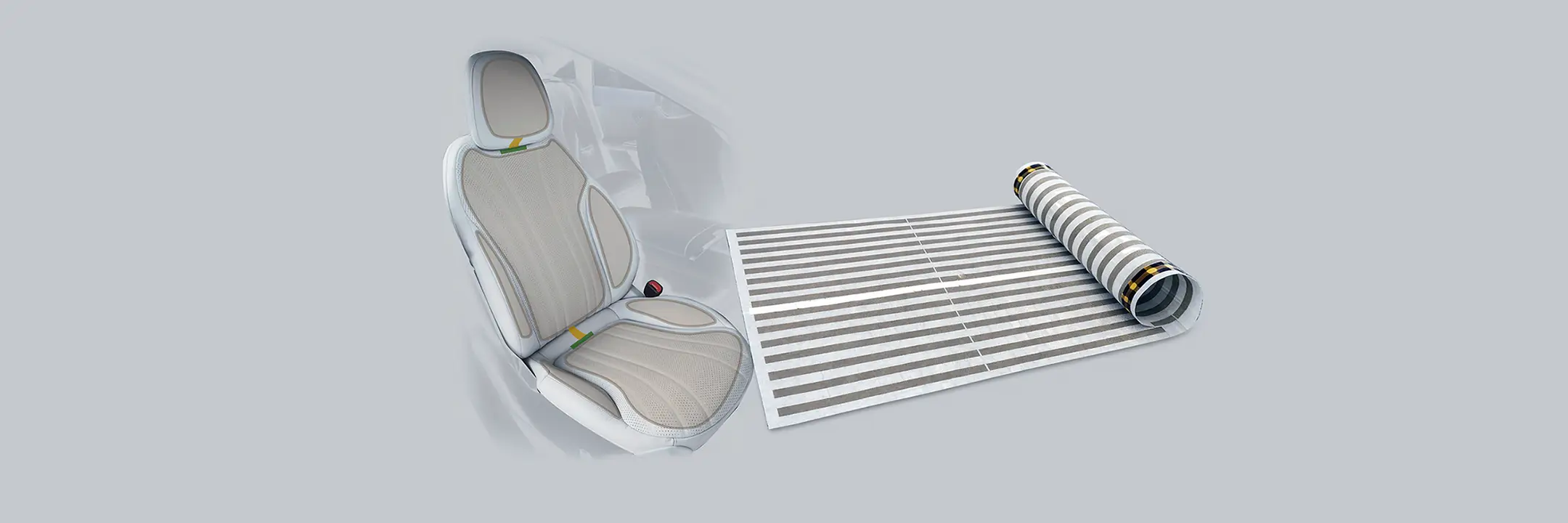
A Production-First Solution: At TG0, we've developed a Pressure-Mapping Seat Insert specifically engineered for true in-vehicle deployment. This technology replaces traditional electronics with moulded conductive polymer sensing layers.
Why automotive brands are paying attention
- Invisible Integration: At just 1.75–2.25 mm thick, the insert fits seamlessly beneath foam or trim without impacting styling or ergonomics.
- Embedded AI Intelligence: Onboard AI models don't just detect occupancy — they project 3D full-body movement, predict passenger behaviour, and estimate weight in real time.
- Automotive-Grade Durability: Validated under extreme temperature cycling, humidity exposure, and mechanical fatigue testing. The system uses components certified to AEC-Q100 and AEC-Q200 standards.
- The Lowest Cost Architecture: By eliminating flexible PCBs, TG0 delivers a high-resolution sensing solution at the lowest system cost in its class.
The future of the Software-Defined Vehicle lies in the passenger's seat — the most personal and intimate interaction we have with a vehicle. TG0's AI-infused sensing technology can elevate the driving experience by making it more comfortable, personalised, and adding a vital layer of safety, without the need for invasive or cumbersome equipment. The technology is sensitive enough to detect nuanced weight differences — distinguishing, for example, a heavy box from a child — and can monitor the driver for signs of agitation or fatigue.
We're moving beyond simple occupancy to a seat that understands, adapts, and protects.